

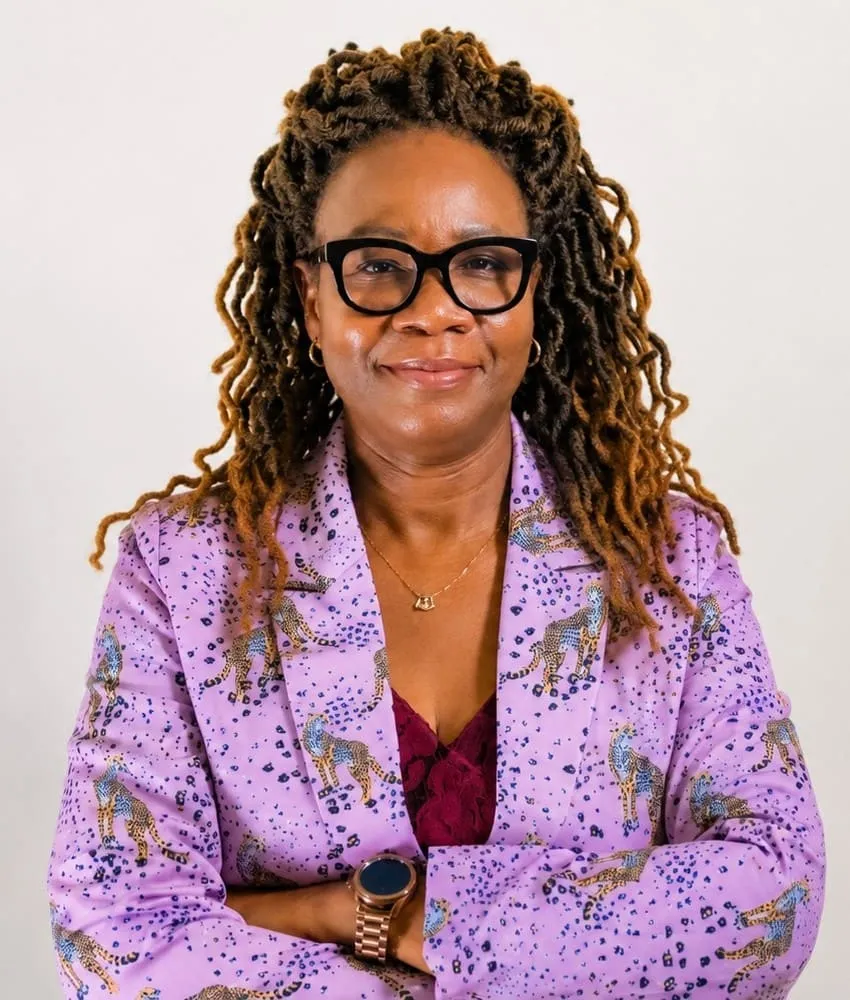
Dr Miriam Mavia-Zając
Director & Founder
Dr Miriam is a Consultant Chartered Psychologist whose work has repeatedly brought her face to face with the gaps between what people need and what existing systems provide.
She is interested in who gets missed, who carries the cost when support is absent or inaccessible, and what might be built differently.
NDY Tomorrows grew naturally from that concern: a space to question the status quo, test new possibilities and develop practical ways of making access, opportunity and support more equitable.
For Dr Miriam, just because something does not yet exist does not mean it is not needed.
Read more
Dr Miriam is HCPC registered and a Chartered Member of the British Psychological Society.
Her relevant qualifications include a Doctor of Psychology and a Master of Studies in Clinical Effectiveness.
Across her clinical, strategic and service-development work, she has become increasingly interested in what happens beyond the consulting room: the systems people have to navigate, the opportunities they can or cannot access, the assumptions built into services, and the consequences when someone's needs do not fit neatly within what is already available.
She notices gaps.
More importantly, she tends to ask what those gaps are costing people. Who waits longer? Who goes without? Who has to become exceptionally resourceful simply to access what others can take for granted? Whose competence hides the amount of effort required to keep functioning? And whose needs remain invisible because no suitable pathway currently exists?
Those questions help explain why NDY Tomorrows matters to her.
Dr Miriam is interested in equity not simply as an aspiration, but as something that can be examined, designed for and acted upon. She is willing to interrogate familiar systems, challenge assumptions and work in the spaces between established services where important needs can otherwise remain unaddressed.
Her work brings together psychology, neurodiversity, clinical leadership, service design, education, cultural awareness, organisational strategy and community thinking. She is particularly interested in the intersections between neurodivergence, identity, family and caring responsibilities, education, employment, opportunity and inequality.
She is also willing to try.
Where an existing model does not work, her instinct is not necessarily to accept its limits, but to understand them and ask what might be possible instead. The absence of a service, programme or pathway does not convince her that there is no need for one. Sometimes it simply means the need has not yet been properly recognised, prioritised or built for.
NDY Tomorrows provides a place for that work: identifying what is missing, understanding who is affected and why, and developing practical initiatives that can widen access to knowledge, support and opportunity.
At its heart is the same question that runs through much of Dr Miriam's work: if the playing field is uneven, what would it actually take to make it fairer?